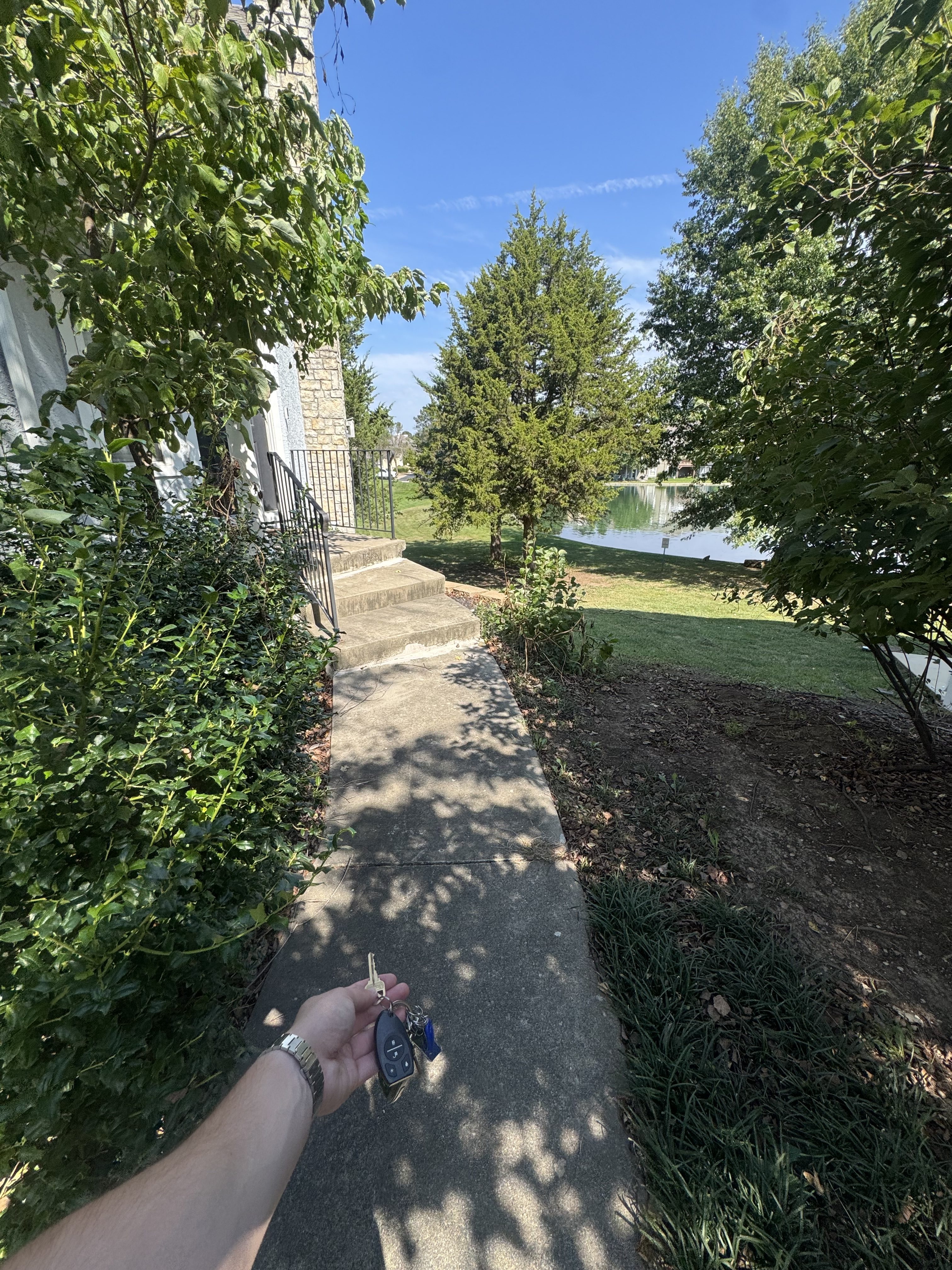
In PG terms, I never particularly cared about being a homeowner.
I know owning a home is a major goal for a lot of people. It just wasn’t really one of mine. I wasn’t dreaming about having my own yard or getting excited about all the random shit that eventually breaks when you own a house.
What I did care about was investing.
Around 2023, I started taking my financial future a lot more seriously. I was investing more, thinking about what I wanted my finances to look like 10 or 20 years down the road, and somewhere in that process I became fascinated with house hacking.
The concept seemed almost stupidly simple: buy a multifamily property, live in one unit and rent out the other. Instead of paying rent to someone else every month, I’d own an asset while somebody else’s rent helped offset the cost of owning it.
Being in the Army Reserve made the idea even more interesting because I was eligible for a VA loan. I spent a ridiculous amount of time on Reddit reading about service members and veterans using VA loans to buy multifamily properties with little or no money down, living in one unit, and eventually moving out and doing it again.
That was the version I had in my head.
Then I actually did it.
In December 2025, I bought a duplex for about $730,000.
My mortgage payment was about $5,300 a month. The other side would eventually rent for $3,000.
It also sat vacant for almost six months.
Nine months later, I’d still buy the exact same duplex again.
But getting here looked a lot different from the clean version of house hacking I originally read about online.
The $757,000 duplex that was supposedly out of my budget
I kept coming back to the idea over the next couple of years, but for a few different reasons, I didn’t actually buy anything.
Then my income increased substantially, and I started looking again.
Eventually, my realtor showed me a duplex in the Kansas City area listed for around $757,000.
My first reaction was basically: Yeah, that’s out of my budget.
Unfortunately, I also really liked it.
The location was probably the first thing that got me. I’d been living on the Missouri side of Kansas City, but for some reason I’d wanted to live on the Kansas side of the metro since I was a teenager. The neighborhood was beautiful, and the property backed up to water.
But the funny part is that the side I planned to live in wasn’t what sold me.
It was nice, but it wasn’t nearly as updated as the pictures I’d seen of the other unit. The other side had been completely renovated with a much more modern, higher-end look, and I was itching to see it.
As soon as I walked in, I remember thinking, Yeah. This is the one.
And that was the side I wasn’t going to live in.
I wanted to rent out the nicer unit because I thought it could command more rent and make the overall numbers work better. Walking through it, I wasn’t exactly seeing cartoon dollar signs floating around the kitchen, but I remember thinking that whoever rented this place was going to love living there.
Then I pulled the rental history.
The numbers weren’t actually that impressive.
That complicated things.
I tried to make the numbers argue me out of it
Liking the property wasn’t enough.
At around $757,000, I needed to make a pretty convincing case to myself that buying it wasn’t a terrible idea.
So I started running scenarios.
A lot of scenarios.
I looked at what I thought I could realistically rent the other side for. I estimated operating expenses, maintenance, vacancy and property management. I looked at different appreciation assumptions and what the property might look like if I eventually moved out and rented both sides.
I also compared it against the boring alternative: keep renting, leave my money invested and continue putting thousands of dollars into the market.
That mattered because I wasn’t buying a house simply because I wanted to own a house. If renting and investing the difference looked substantially better, I was perfectly willing to keep doing that.
The historical rent numbers for the duplex weren’t amazing either. They were actually lower than what I eventually ended up getting.
So this wasn’t one of those house-hacking examples where I found some absurdly underpriced duplex and immediately knew I’d struck gold.
Part of what I was paying for was the property itself.
I loved the location. I liked the idea of owning in that area. I thought the property had good long-term potential, and I genuinely wanted to live there.
It was becoming less of a pure investment decision and more of what I thought of as a lifestyle investment.
That made the decision harder, not easier.
If I only cared about maximizing the return on every dollar, there were probably cleaner investments I could make. But if I could own an asset I believed in, have somebody else’s rent offset a meaningful part of my housing cost, and actually enjoy living there in the meantime, that combination was worth something to me too.
Eventually, I convinced myself the deal made enough sense to keep going.
Then the appraisal came back at $700,000.
The deal almost died at the appraisal
I was pissed.
The property was under contract around $757,000, and the VA appraisal came back at $700,000.
I thought the valuation was too low. The property backed up to water, which wasn’t common in the neighborhood, and the unit I planned to rent had been completely renovated. I didn’t think the appraisal adequately reflected what made this particular duplex different.
More importantly, a $57,000 gap created a very real problem.
I was using a VA loan with no down payment. That was one of the things that made house hacking so attractive to me in the first place. But the VA wasn’t going to magically finance whatever number I wanted to pay for the property.
There was absolutely no way in hell I was bringing tens of thousands of dollars to the table just to make the deal work.
This is where having a good lender ended up mattering a lot more than I expected.
My lender helped challenge the appraisal through the VA’s Reconsideration of Value process. Eventually, the supported value came up to $730,000. We renegotiated the purchase price to match it, and we were able to get the deal done there.
I had cleared what felt like the biggest obstacle.
Then I looked at what closing was actually going to do to my cash.
“Zero down” sounds a lot like “you don’t need much money.”
That was not my experience.
Zero down still didn’t mean zero cash. I had already put down a $5,000 deposit, owed about $10,600 more at closing, and had paid some other costs along the way. Altogether, roughly $16,000 of my own cash had gone into getting the deal closed.
Some costs were financed into the loan, but I still had to drain most of my savings and sell some of my investments to get across the finish line.
That part hurt.
For the previous few years, I’d gotten used to doing the opposite. I was building my savings and putting thousands of dollars into investments most months. Now I was intentionally interrupting that process to buy one very expensive asset.
I remember feeling anxious about watching my cash cushion disappear.
And that feeling didn’t magically go away once I got the keys.
Owning it felt different than modeling it
Closing on the duplex was exciting.
Actually owning it felt different.
Once I moved in, the reality of the whole thing started hitting me at once. I had just taken on a roughly $5,300 monthly payment, most of my cash cushion was gone, and the unit that was supposed to offset a big chunk of that payment was sitting empty.
This wasn’t hypothetical anymore.
This damn thing was mine now.
I had some help with the housing cost at the time, which made those months easier. But I had expected the rental side to fill much faster than it did.
At first, I was working with a property manager who ended up not being a good fit for me. I eventually switched to another manager who was more responsive and did a much better job marketing the property.
Still, the months kept going by.
I had accounted for vacancy before buying. I knew there would eventually be periods without a tenant.
I just hadn’t expected the first one to last almost six months.
Eventually, we found tenants I felt good about, but getting them into the property meant accepting a later start date and eating more vacancy.
I remember doing the math and realizing that waiting would cost me thousands more in the short term. At that point, though, getting good tenants in the property mattered more to me than squeezing every possible dollar out of the next couple of months.
I agreed.
By June, the other side was finally rented for $3,000 a month.
Almost six months after closing, the house hack finally started doing the thing I bought it to do.
What the numbers actually look like
Once the other side was rented, the math finally started mathing the way I had originally envisioned.
My original mortgage payment, including taxes and insurance through escrow, was about $5,300 a month.
The other side rents for $3,000.
So I live in a $730,000 duplex for $2,300 a month, right?
Not exactly.
This is where house-hacking math can get a little too convenient.
Rent is not profit.
I pay a property manager 8% of the rent. My HOA is roughly $900 twice a year. Things break. There are repairs. There will eventually be more vacancy.
Since the tenants moved in, I’ve already had roughly $1,100 in repairs come through the property. Nothing catastrophic. Just HVAC, electrical work and other random things that apparently decided they wanted some of the rent too.
In a relatively normal month, my actual housing cost is somewhere around the mid-$2,000s before utilities and unexpected repairs. If I spread the repairs I’ve actually experienced so far across the months the property has been rented, it’s been closer to the high-$2,000s.
So no, I’m not “living for free.”
But somebody else is paying $3,000 a month to help me own an asset that I also get to live in.
I’m not gonna lie – that’s pretty fucking awesome.
And not every dollar of my mortgage payment is simply disappearing as an expense. Some of it is paying down principal. The property could appreciate over time. Rents could rise.
Or those things might not happen the way I hope.
What I know today is what the property costs me, what income it’s producing and whether I’m happy owning it under those conditions.
So far, I am.
What it’s actually like living next to my tenants
Before doing this, I wondered whether living next to my tenants would feel weird.
Honestly, it really doesn’t.
I got lucky. They’re good people, they’re quiet, and we get along well. Most of the time, they don’t really feel like my tenants. They feel like my neighbors.
I think using a property manager helps a lot with that.
If something breaks or there’s an issue with the property, they don’t have to knock on my door because they saw my car in the driveway. They go through the property manager.
That separation is worth something to me.
I’m friendly with the people living next to me without also having to personally manage the business relationship every time something goes wrong.
I work a full-time job and I’m also in the Army Reserve. The last thing I want to think about when I’m done working is somebody else’s broken dishwasher.
Property management costs me 8% of the rent, and so far, I think it’s worth it.
I don’t have much interest in becoming the guy collecting rent, coordinating every repair and fielding tenant questions on top of everything else I’m already doing.
Especially when the tenants can literally see whether I’m home.
Would I buy it again?
Knowing everything I know now, would I still buy the same duplex for the same price?
Yes.
But I’d go into it with more cash.
I underestimated how much peace of mind liquidity would matter once I actually owned the property. Being able to afford a few months without rental income and feeling comfortable doing it turned out to be two different things.
I had spent years watching my savings and investments grow. Suddenly, most of my savings were gone, I’d sold some investments to close, and I had a $5,300 payment attached to my name.
Even though I’d planned for that possibility, the reality created more anxiety than I expected.
If I did it again, I’d sacrifice some efficiency on the spreadsheet to have more breathing room in real life.
I’d also try to stay more detached from the property itself.
I loved this place before I owned it. That’s dangerous when you’re trying to decide whether an investment makes sense.
The appraisal ended up being a useful test of that. I really wanted the property, but there was still a point where I would have walked away.
That’s an important distinction in how I approached the purchase: I really wanted the property. I didn’t need the deal.
If the numbers had stopped making sense, I needed to be okay with somebody else owning it.
So, was house hacking worth it?
For me, yes.
I don’t need to know what this property will be worth in 10 years to know that, so far, I’m glad I bought it.
I love living here. I love the location. I love having the water behind the house. I like the people living next door. And every month, $3,000 of rental income comes in from an asset that I own and also get to live in.
That’s pretty damn close to what fascinated me about house hacking in the first place.
I just understand the tradeoffs a lot better now.
Before buying, I thought mostly about whether the numbers worked. Now I think just as much about liquidity, vacancy, who I’m trusting to manage the property and how much uncertainty I’m actually comfortable carrying.
My original plan was pretty simple: buy a duplex, live in one side, rent the other, move out and repeat.
Actually owning one has made me more selective about the “repeat” part.
I don’t want to collect properties just so I can say I own a bunch of real estate. If I buy another one, the numbers will have to make sense on their own. I’ll want more cash sitting on the sidelines. And I’ll know a little better what I’m signing myself up for.
That doesn’t make me less excited about this one.
I’d buy this duplex again.
In 2023, I liked the idea of living in an asset while somebody else helped me pay for it.
Nine months later, that’s exactly what I’m doing.
It just turns out the spreadsheet was the easy part.